Mahabharata
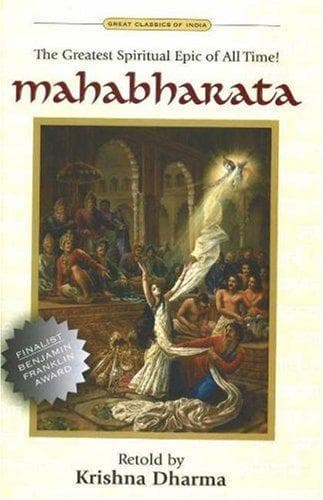
The full sweep of the Mahabharata — a family torn in two, and a war that ends an age — told as a single continuous story.
£25.00draft price3 formats
View BookPreview. Prices and reviews are placeholders.Prices, reader reviews and press quotes are placeholders awaiting real data — nothing on this site has been invented to fill a gap.

About the author
Krishna Dharma writes narrative retellings of India’s classical literature. His books take the Mahabharata, the Ramayana and the Srimad Bhagavatam — works that run to tens of thousands of verses in the original Sanskrit — and tell them as continuous stories in modern English.
The aim is not to summarise or to comment. It is to let a reader who has never opened an Indian epic follow the whole thing: the families, the quarrels, the exile, the war, and the arguments about duty that run underneath all of it.
Alongside the epics he has written retellings of the Panchatantra fables, books on the goddesses of the tradition, and Why Me?, a short book on making sense of suffering. He lives and works in the United Kingdom.
[Add full biography]
Full biography from the client: dates, background, how the work began, teaching and broadcasting history, translations and editions, selected appearances and interviews. Nothing on this page has been invented — anything not supplied is left blank rather than guessed.
The books
The full sweep of the Mahabharata — a family torn in two, and a war that ends an age — told as a single continuous story.
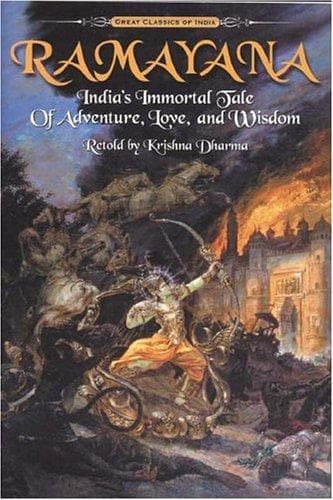
A prince exiled on the eve of his coronation, a wife carried off by a demon king, and an army of bears and monkeys that goes to get her back.
Brilliant as the Sun
The opening of the Srimad Bhagavatam, retold: sages gather in a forest and ask what is worth knowing before the world ends.